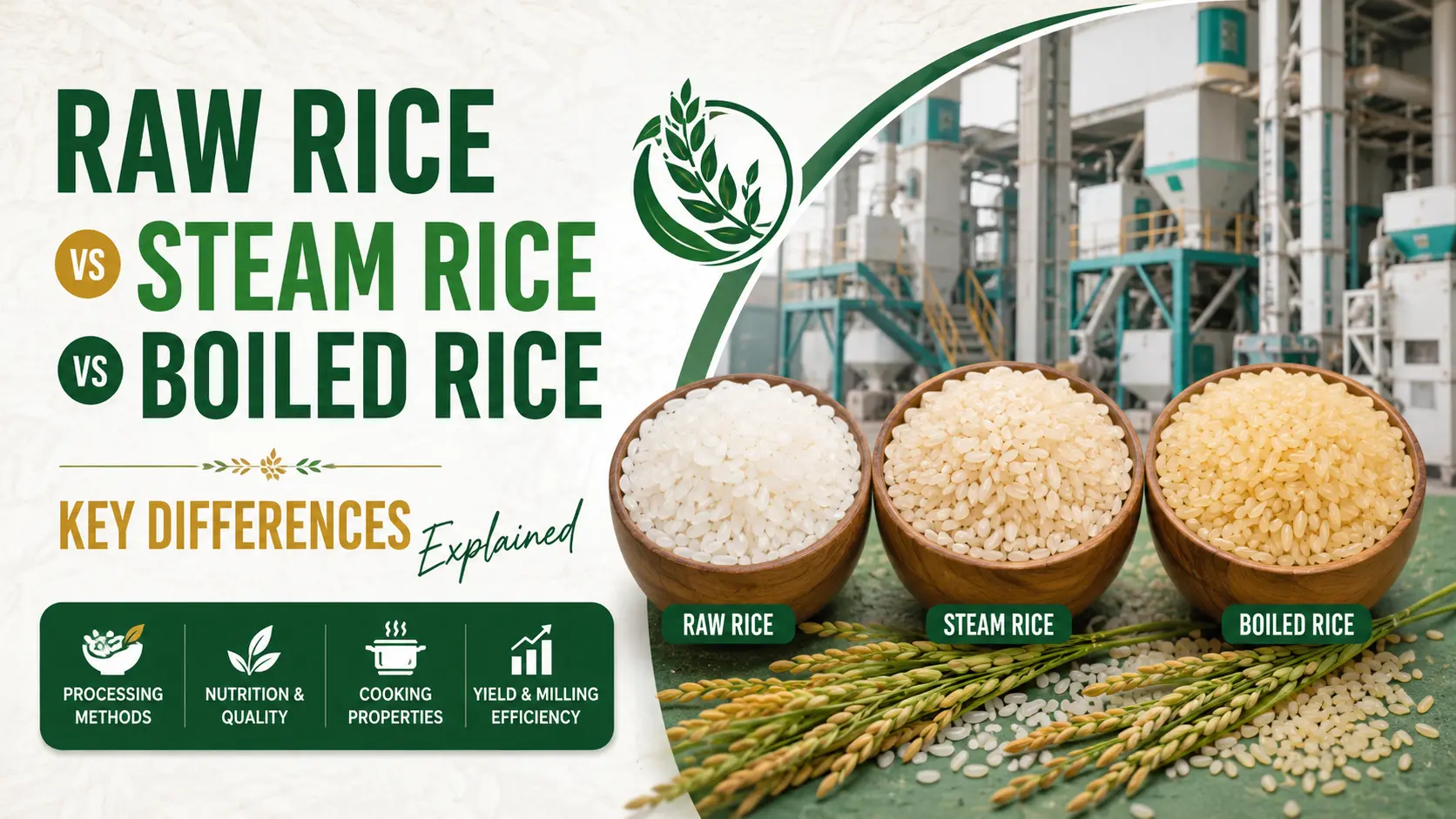
Rice is available in different forms depending on the processing method used. Among the most common varieties are raw rice, steam rice, and boiled rice. Although they may appear similar, each type undergoes a different processing technique that affects its texture, nutritional value, cooking characteristics, shelf life, and market demand.
For rice mill owners, traders, exporters, and consumers, understanding the differences between these rice varieties is essential. In this article, we will compare raw rice, steam rice, and boiled rice in detail and explain how modern rice mill machinery plays a vital role in processing each type efficiently.
What is Raw Rice?
Raw rice is rice that is milled directly after harvesting and drying without undergoing any steaming or parboiling process. It retains its natural color and texture, making it a popular choice for everyday consumption. Raw rice cooks softer and fluffier than processed varieties and is widely used in households and food industries.
Also Read: How to Reduce Broken Rice Percentage During Milling
Characteristics of Raw Rice
- Processed without steaming or boiling
- Naturally white in appearance
- Softer texture after cooking
- Requires less processing time
- Popular in many domestic markets
Raw rice is often preferred for dishes where fluffy and soft grains are desired.
What is Steam Rice?
Steam rice is produced by exposing paddy to steam before the milling process. The steaming treatment partially transfers nutrients from the outer layers of the grain into the kernel, improving its nutritional value and grain strength.
Unlike boiled rice, steam rice undergoes controlled steaming without extensive soaking and boiling. This process helps reduce grain breakage during milling while maintaining good cooking quality.
Characteristics of Steam Rice
- Processed using steam treatment
- Stronger grain structure
- Better rice recovery during milling
- Improved nutritional retention
- Longer shelf life compared to raw rice
Steam rice is widely exported because of its uniform grain quality and excellent cooking performance.
What is Boiled Rice?
Boiled rice, commonly known as parboiled rice, is produced through a process involving soaking, steaming, and drying of paddy before milling. The process causes nutrients from the husk and bran layers to migrate into the grain. The resulting rice becomes harder and more durable, making it less prone to breakage during milling and transportation.
Characteristics of Boiled Rice
- Soaked, steamed, and dried before milling
- Higher grain strength
- Better nutrient retention
- Longer storage life
- Reduced milling losses
Boiled rice is extensively used in commercial food production and export markets.
Raw Rice vs Steam Rice
One of the most searched comparisons in the rice industry is raw rice vs steam rice.
Although both varieties originate from the same paddy, the processing method creates significant differences.
Processing Method
Raw rice is milled directly after drying, whereas steam rice undergoes steam treatment before milling.
Grain Strength
Steam rice generally has stronger grains due to the steaming process, reducing the chances of breakage during milling.
Nutritional Value
Steam rice often retains more nutrients compared to raw rice because steaming helps preserve valuable vitamins and minerals.
Shelf Life
Steam rice usually offers better storage stability than raw rice. When comparing steam rice vs raw rice, steam rice often provides better milling efficiency and grain durability.
Steam Rice vs Boiled Rice
Many people confuse these two varieties because both involve heat treatment before milling. However, there are important differences between steam rice vs boiled rice.
Processing Intensity
Steam rice undergoes controlled steaming, while boiled rice follows a more extensive soaking, steaming, and drying process.
Grain Hardness
Boiled rice is generally harder and stronger than steam rice due to deeper heat penetration during processing.
Nutritional Retention
Both rice types retain nutrients effectively, but boiled rice often demonstrates slightly higher nutrient migration into the grain.
Cooking Characteristics
Steam rice typically cooks softer than boiled rice, whereas boiled rice produces firmer grains.
As a result, the choice between steamed rice vs boiled rice often depends on consumer preference and end-use requirements.
Boiled Rice vs Raw Rice
The comparison between boiled rice vs raw rice highlights some of the biggest differences in rice processing.
Milling Performance
Boiled rice experiences lower breakage during milling because the grains become stronger after parboiling.
Nutritional Benefits
Boiled rice retains more nutrients compared to raw rice.
Grain Appearance
Raw rice appears brighter and whiter, while boiled rice may have a slightly yellowish appearance due to the processing method.
Shelf Stability
Boiled rice generally has a longer shelf life than raw rice.
For industrial rice processors, boiled rice often offers better recovery rates and reduced wastage.
Comparison Table: Raw Rice, Steam Rice, and Boiled Rice
| Feature | Raw Rice | Steam Rice | Boiled Rice |
|---|---|---|---|
| Processing Method | Direct Milling | Steamed Before Milling | Soaked, Steamed & Dried |
| Grain Strength | Moderate | High | Very High |
| Nutritional Retention | Standard | Good | Excellent |
| Milling Breakage | Higher | Lower | Lowest |
| Shelf Life | Moderate | Good | Excellent |
| Cooking Texture | Soft | Medium | Firm |
| Export Demand | Good | High | Very High |
Which Rice Type is Better?
There is no single answer because each rice variety serves different market requirements.
Feature of Raw Rice
- Softer texture is preferred
- Bright white appearance is required
- Lower processing costs are important
Choose Steam Rice If:
- Better grain quality is needed
- Improved nutrition is desired
- Reduced milling losses are important
Choose Boiled Rice If:
- Maximum grain strength is required
- Long-term storage is needed
- Export-quality production is the goal
Role of Rice Mill Machinery in Processing Different Rice Types
The quality of raw rice, steam rice, and boiled rice depends heavily on the efficiency of the rice milling process. Advanced rice mill machinery ensures proper cleaning, dehusking, whitening, polishing, grading, and sorting of rice grains.
Modern milling equipment helps:
- Improve rice recovery rates
- Reduce grain breakage
- Increase processing efficiency
- Maintain grain quality
- Enhance productivity
For rice processors handling multiple rice varieties, reliable rice mill machinery is essential for achieving consistent product quality and profitability.
Conclusion
Understanding the differences between raw rice, steam rice, and boiled rice is important for consumers, traders, exporters, and rice mill operators. While raw rice offers a softer texture and natural appearance, steam rice provides improved grain strength and nutritional retention. Boiled rice delivers superior durability, better recovery rates, and longer shelf life.
Whether comparing raw rice vs steam rice, steam rice vs boiled rice, steamed rice vs boiled rice, steam rice vs raw rice, or boiled rice vs raw rice, each variety has unique advantages depending on processing goals and market demand. By using advanced rice mill machinery and adopting proper processing techniques, rice manufacturers can produce high-quality rice that meets the expectations of domestic and international buyers.