Rice is one of the most important staples found and consumed across India. Efficient rice milling is therefore critical to ensure high-quality production. With advancements in technology, there have been many changes that have come about regarding paddy milling. These have enabled rice producers to be able to produce good-quality rice in an efficient manner without having grains to be broken during the process.
In this guide, we will discuss the various types of rice mills, the complete rice mill machinery list, the byproducts of rice milling, and the key factors to consider before purchasing rice milling equipment.
What is a Rice Mill?
A rice mill is a facility where paddy is processed into edible rice through a series of cleaning, dehusking, polishing, grading, and packaging operations. The primary objective of a rice mill is to remove impurities and husk from paddy while preserving the quality of rice grains.
Modern rice mills use advanced machinery to increase efficiency, reduce losses, and produce rice that meets market standards. The choice of machinery depends on production capacity, automation level, and the type of rice being processed.
Also Read: Polished Rice: Meaning, Process & Comparison with Unpolished Rice
Types of Rice Mills
1. Traditional Rice Mills
Traditional rice mills use basic equipment and manual labor for processing paddy. These mills are commonly found in rural areas and are suitable for small-scale operations.
Advantages:
- Low initial investment
- Simple operation
- Suitable for local processing
Limitations:
- Lower efficiency
- Higher grain breakage
- Limited production capacity
2. Semi-Automatic Rice Mills
Semi-automatic rice mills combine manual operations with mechanized equipment. These mills offer better productivity and quality than traditional mills while maintaining moderate investment costs.
Advantages:
- Improved rice recovery
- Reduced labor requirements
- Better grain quality
Limitations:
- Requires some manual handling
- Lower efficiency compared to fully automatic systems
3. Fully Automatic Rice Mills
Fully automatic rice mills are equipped with advanced machines that handle the entire milling process with minimal human intervention. These mills are ideal for commercial production and large-scale processing.
Advantages:
- High production capacity
- Consistent quality
- Reduced labor costs
- Better rice recovery rate
Limitations:
- Higher investment cost
- Requires technical expertise for maintenance
4. Modern Integrated Rice Mills
Integrated rice mills combine multiple processing stages into a single streamlined system. These facilities include cleaning, dehusking, polishing, grading, color sorting, and packaging units.
Advantages:
- Maximum efficiency
- Premium rice quality
- High profitability
- Reduced wastage
Rice Mill Machinery List
The performance of a rice mill depends largely on the quality of machinery used. Below is a comprehensive rice mill machinery list commonly found in modern rice processing plants.
Paddy Cleaner
A paddy cleaner removes dust, stones, straw, and other impurities from incoming paddy before processing begins.
Destoner
A destoner separates stones and heavy contaminants from paddy to protect downstream equipment and maintain product quality.
Paddy Separator
A paddy separator separates unhusked paddy from brown rice after the dehusking process. It helps improve milling efficiency and rice recovery.
Rice Husker
The rice husker removes the outer husk from paddy grains, producing brown rice.
Rice Whitener
A rice whitener removes bran layers from brown rice to produce white rice suitable for consumption.
Rice Polisher
The rice polisher enhances the appearance of rice by giving it a smooth and shiny finish.
Rice Grader
A rice grader separates rice grains according to size and quality, ensuring uniformity in the final product.
Color Sorter
A color sorter identifies and removes defective, discolored, or damaged grains using advanced optical technology.
Bucket Elevator
Bucket elevators transport grains between different processing machines efficiently and safely.
Packaging Machine
Packaging machines automate the filling and sealing of rice bags, improving productivity and reducing labor costs.
By Products of Rice Milling
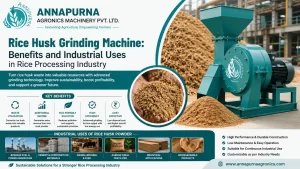
Rice Husk
Rice husk is the outer covering removed during the dehusking process. It is commonly used as:
- Biomass fuel
- Power generation fuel
- Raw material for silica extraction
- Animal bedding
Rice Bran
Rice bran is produced during whitening and polishing operations. It is widely used for:
- Rice bran oil extraction
- Animal feed production
- Nutritional supplements
Broken Rice
Broken rice grains are separated during grading and can be used in:
- Food processing industries
- Brewing applications
- Animal feed manufacturing
Rice Germ
Rice germ contains valuable nutrients and is often used in health food products and oil extraction processes.
Understanding the by products of rice milling is important because they can generate additional revenue streams and improve the overall profitability of a rice mill business.
Factors to Consider Before Buying Rice Mill Machinery
Investing in rice milling equipment requires careful planning. The following factors should be evaluated before making a purchase decision.
Production Capacity
Determine your expected daily or hourly processing requirements. Rice mill machinery should be selected based on your current production needs as well as future expansion plans.
Quality of Machinery
High-quality machinery offers better performance, lower maintenance costs, and a longer service life. Always choose equipment manufactured using durable materials and modern technology.
Automation Level
Consider whether you need a semi-automatic or fully automatic system. Higher automation can reduce labor dependency and improve operational efficiency.
Rice Recovery Rate
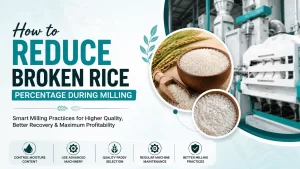
One of the most important factors is the machine’s ability to maximize rice recovery while minimizing grain breakage. Better recovery rates directly improve profitability.
Energy Efficiency
Energy-efficient machinery helps reduce operating costs and improves the sustainability of rice milling operations.
Maintenance Requirements
Choose machines that are easy to maintain and have readily available spare parts. Regular maintenance is essential for ensuring smooth operation.
Space Availability
The available space in your facility should be considered when designing a rice mill layout. Proper planning ensures efficient workflow and future scalability.
Supplier Reputation
Always purchase machinery from an experienced and reliable manufacturer with a proven track record in the rice processing industry.
After-Sales Support
Technical assistance, spare parts availability, installation services, and maintenance support are critical factors that should not be overlooked.
Budget and Return on Investment
While cost is important, focus on the overall value and long-term benefits of the equipment. Investing in quality machinery often delivers better returns over time.
Why Modern Rice Mills are a Better Investment
Modern rice mills offer significant advantages over traditional systems. They improve processing efficiency, reduce wastage, increase rice recovery, and produce superior-quality rice that meets market demands.
Additionally, advanced rice mill machinery helps manufacturers process larger volumes of paddy while maintaining consistency and reducing operational costs.
As consumer demand for premium rice continues to grow, investing in modern milling technology has become essential for businesses seeking long-term success in the rice processing industry.
Conclusion
Choosing the right rice mill and machinery is a crucial decision that directly impacts productivity, product quality, and profitability. Understanding the different types of rice mills, evaluating the complete rice mill machinery list, and recognizing the value of the by products of rice milling can help business owners make informed investment decisions.
When buying equipment, one should look at several aspects including production capability, automation, energy efficiency, maintenance needs, and supplier assistance among others. By investing in superior rice milling machines, companies will enjoy greater efficiency in production, increased rice yield, and sustained success in the ever-competitive environment.
At Annapurna Agronics Machinery Pvt. Ltd., we are committed to delivering innovative and high-performance rice milling solutions designed to meet the evolving needs of the rice processing industry.