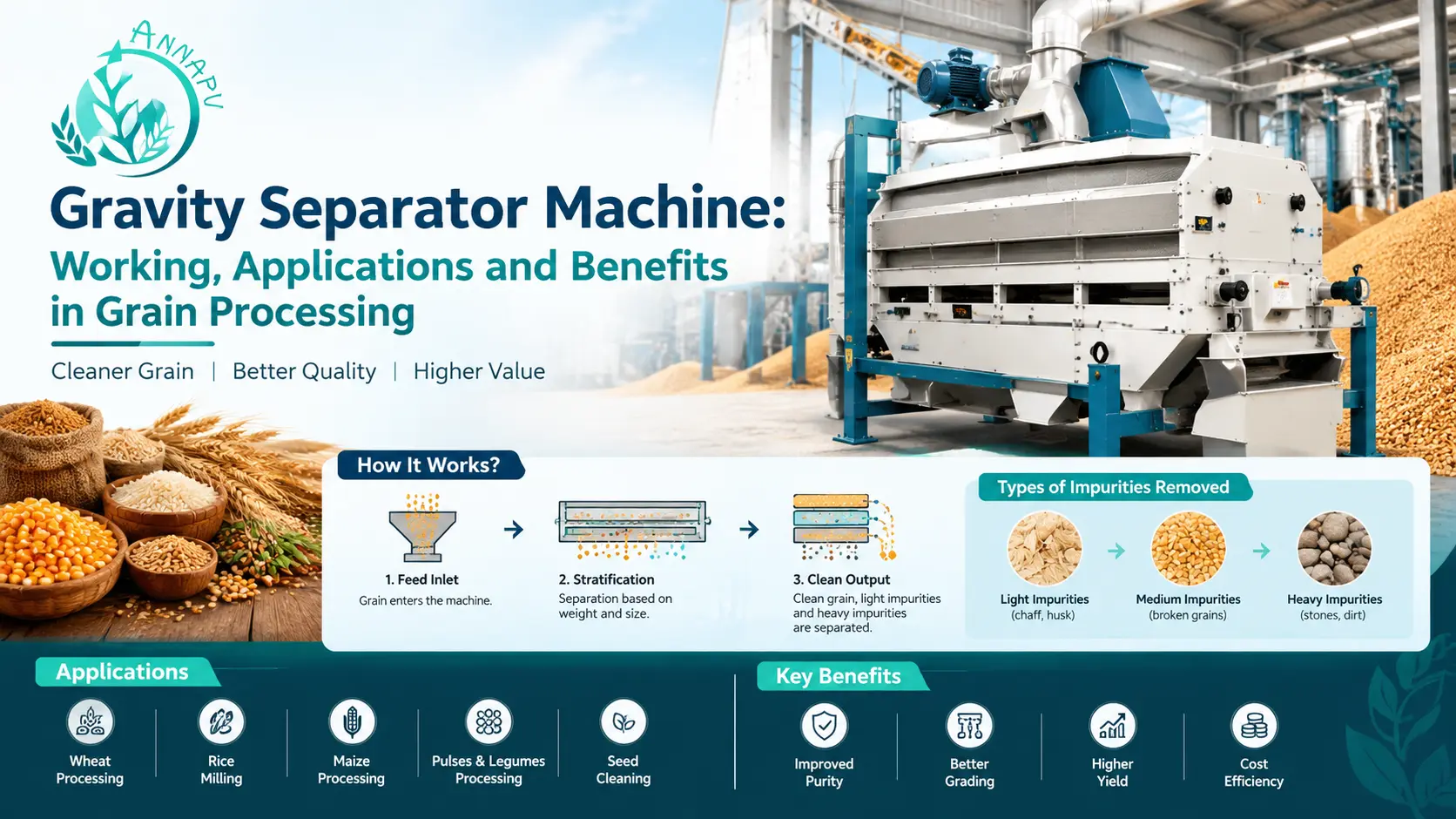
Grain quality is an important factor in the agricultural and food processing industries. Whether it is wheat, rice, maize, pulses or oilseeds, processors need to remove defective grains and separate materials according to their quality before further processing or packaging. A gravity separator machine helps achieve this by separating grains and seeds based on differences in density and specific weight.
Unlike conventional screening machines that mainly separate materials according to size, a gravity separator can distinguish between particles of similar dimensions but different densities. This makes it a valuable piece of equipment for grain cleaning plants, rice mills, seed processing units and other agricultural processing facilities.
In this blog, we will explore the working principle, applications, key benefits and important considerations when selecting a gravity separator machine for your business.
What Is a Gravity Separator Machine?
A gravity separator machine is an industrial grain processing machine designed to separate heavy and lightweight particles according to their specific gravity. It uses controlled airflow, mechanical vibration and an inclined separation deck to classify grains and seeds into different quality grades.
For example, a batch of wheat may contain fully developed kernels alongside shrivelled, immature or insect-damaged grains. Although some of these grains may have similar sizes, their density can differ. A gravity separator uses these differences to separate the material more effectively.
The machine is commonly used after preliminary cleaning and sizing, when the objective is to improve the quality of the remaining product. Its performance depends on the type of material, moisture content, feed consistency and machine settings.
How Does a Gravity Separator Machine Work?
The working principle of a gravity separator is based on the difference in particle density. Airflow and vibration help distribute materials across a specially designed deck so that heavier and lighter particles move along different paths.
The process generally involves the following stages:
1. Feeding the Raw Material
Grains or seeds are fed into the machine through a hopper. A controlled feeding system spreads the material evenly across the separation deck. Uniform feeding is important because an uneven layer can reduce separation accuracy.
2. Controlled Airflow
A blower forces air upward through the perforated deck. This airflow creates a fluidised layer in which lighter particles respond differently from heavier particles.
3. Deck Vibration
The deck vibrates continuously to move the material across its surface. Combined with airflow, this motion helps separate particles according to their density and weight.
4. Density-Based Separation
Heavier particles generally remain closer to the deck surface, while lighter particles become more suspended in the airflow. Deck inclination and vibration help direct these fractions towards different discharge points.
5. Collection of Separated Material
The separated material exits through designated outlets. Depending on the machine and its settings, the output may include a heavier, higher-density fraction, an intermediate fraction and a lighter fraction.
The operator can adjust factors such as airflow, deck inclination, vibration and feed rate according to the material being processed. Correct adjustment is essential for achieving the desired quality without unnecessarily losing good grains.
Key Components of a Gravity Separator Machine
A typical gravity separator consists of several components that work together to provide consistent separation.
- Feed hopper: Supplies grain or seed to the machine.
- Vibrating deck: Supports and moves the material during separation.
- Air blower: Provides the airflow required to stratify particles.
- Vibration mechanism: Produces the movement needed for material classification.
- Deck adjustment system: Allows the operator to adjust the angle for different products.
- Discharge outlets: Collect the separated fractions.
- Electric motor and control panel: Support machine operation and adjustment.
The design and configuration of these components may vary depending on the machine model, required capacity and processing application.
Applications of Gravity Separator Machines in Grain Processing
Gravity separators are used across several agricultural and food processing industries because density-based separation can improve product consistency.
1. Rice Milling Industry
In rice mills, gravity separators help separate lightweight, immature or damaged grains from denser rice kernels. This additional grading step can improve the consistency of the final product and support better quality control.
2. Wheat and Maize Processing
Wheat and maize processing facilities can use gravity separation to remove low-density kernels after preliminary cleaning. This helps improve the quality of grain sent for milling, storage or other processing operations.
3. Seed Processing Plants
Seed processors use gravity separators to grade seeds according to density. Removing lightweight or poorly developed seeds can improve the quality of the selected seed lot. However, actual germination performance also depends on seed variety, storage conditions and other quality factors.
4. Pulses and Dal Mills
Gravity separators can process pulses such as chickpeas, lentils, moong and urad. They help distinguish denser, well-developed grains from lighter or defective material, supporting more consistent processing quality.
5. Spices and Oilseeds
Suitable gravity separators can also be used for products such as coriander, cumin, sesame and other oilseeds. Machine settings must be matched to the product’s size, density and flow characteristics.
Benefits of Using a Gravity Separator Machine
Installing an appropriate gravity separator can offer several operational and commercial benefits.
Improved Product Quality
The machine helps separate lightweight and defective grains that may remain after conventional cleaning. This can improve the uniformity of the processed product.
Better Grading Accuracy
Because the machine focuses on density differences, it can separate certain materials that are similar in size but differ in weight. This complements screening and other grain cleaning methods.
Reduced Material Loss
When properly adjusted, a gravity separator can improve the recovery of usable grain by separating valuable material from unwanted fractions more effectively. Results depend on feed quality and operating conditions.
Improved Processing Efficiency
Removing unsuitable material before subsequent processing can help maintain more consistent feed quality for downstream machinery. This supports smoother operation throughout the grain processing line.
Versatile Applications
Gravity separators can process a range of suitable grains, seeds, pulses and other free-flowing granular products. The correct deck configuration and settings are important when changing between materials.
Potential Commercial Benefits
Better grading and more consistent product quality may help processors meet buyer specifications and improve the marketability of their output. The actual financial benefit depends on product prices, yield, operating expenses and the quality requirements of the target market.
Factors to Consider Before Buying a Gravity Separator Machine
Selecting the right machine is important for maintaining performance and controlling operating costs. Before investing, consider these factors:
- Processing capacity: Choose a machine that matches your required throughput.
- Type of material: Confirm that the machine is suitable for your grain, seed or pulse.
- Separation quality: Ask how effectively it can separate the specific heavy and light fractions in your product.
- Adjustability: Look for suitable controls for airflow, vibration, feed rate and deck inclination.
- Power consumption: Evaluate electricity requirements alongside expected production.
- Maintenance requirements: Check access to cleaning points, replacement parts and routine servicing.
- Installation and support: Consider available technical assistance, operator training and after-sales service.
It is also advisable to discuss your raw material characteristics with the machinery supplier and, where possible, arrange a product trial before making a final decision.
Why Choose the Right Grain Processing Machinery?
A gravity separator works best as part of a properly planned grain processing line. Depending on the product and required output, the overall setup may include pre-cleaners, sieves, destoners, elevators and grading equipment.
Choosing machinery according to your raw material, production capacity and quality targets can help avoid unnecessary processing costs. Proper operation, regular maintenance and suitable machine adjustments are equally important for achieving consistent results.
Annapurna Agronics Machinery Pvt. Ltd. supports businesses looking for agricultural and grain processing machinery solutions. If you are planning to establish a new processing unit or upgrade an existing plant, evaluate your production requirements carefully before selecting equipment.
Conclusion
A gravity separator machine plays an important role in modern grain processing by separating materials according to density rather than relying only on size. Its combination of controlled airflow, vibration and deck inclination helps distinguish heavier grains from lightweight or defective particles.
From rice mills and seed processing plants to pulse, spice and oilseed facilities, the machine can improve grading consistency and support efficient production when correctly selected and operated.
For businesses investing in grain processing machinery, the right gravity separator can be a valuable addition to an integrated cleaning and grading system. Assessing product characteristics, processing capacity, separation requirements and maintenance needs will help you make a practical and informed investment decision.