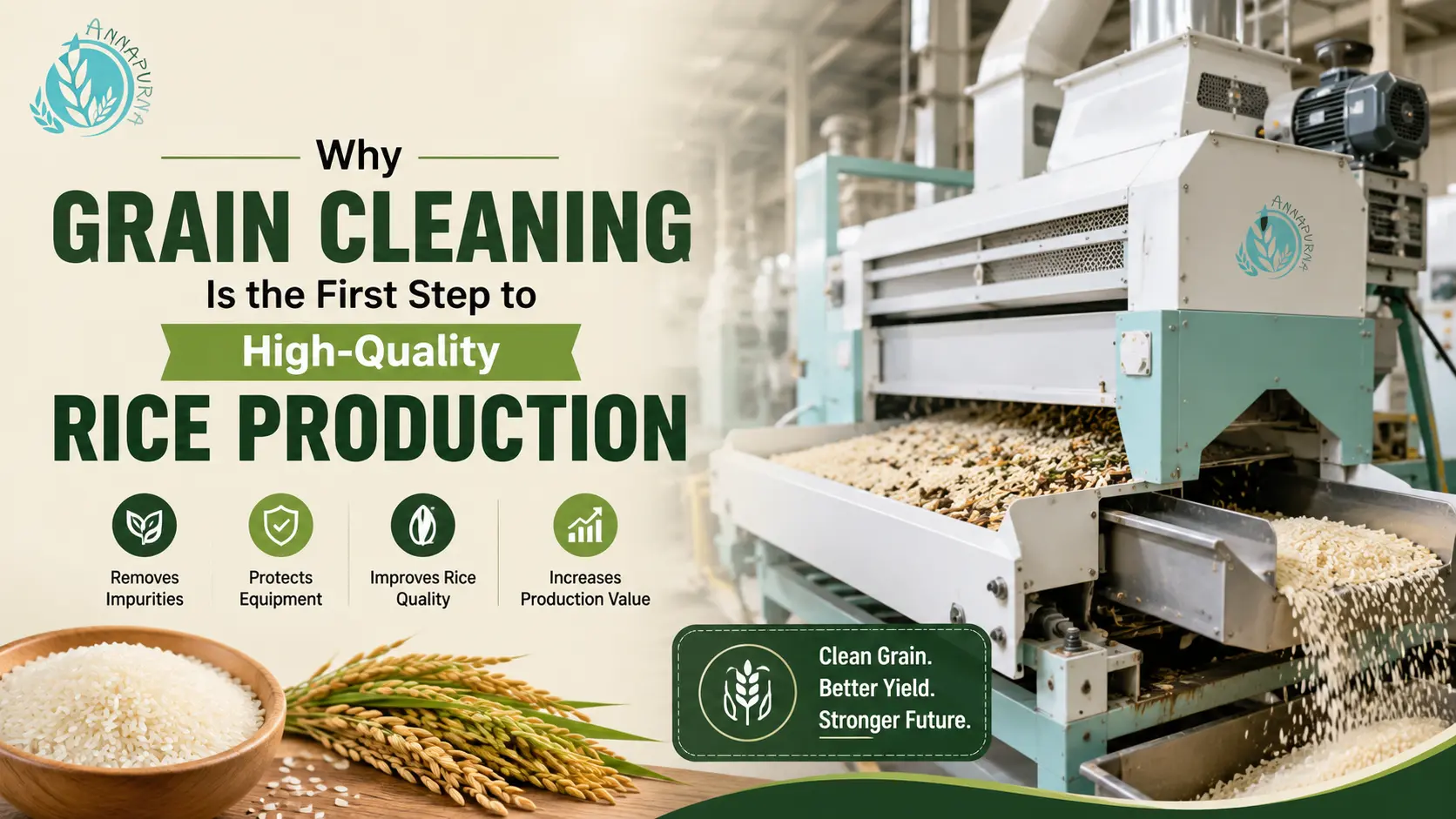
Rice is one of the most consumed staple foods in the world, and its quality begins long before the milling process. While advanced rice milling machines play an important role in producing premium-quality rice, the foundation of efficient milling lies in one essential process—grain cleaning. Removing impurities from paddy before milling not only improves the quality of the final product but also enhances machine performance, increases yield, and reduces operational costs.
Many rice mill owners focus primarily on milling equipment, but overlooking the cleaning stage can result in broken grains, poor-quality rice, increased machine wear, and lower profitability. This is why grain cleaning is considered the first and most important step in modern rice production.
In this blog, we will explore why grain cleaning is essential, how it works, its benefits, and the equipment used to achieve superior rice quality.
What Is Grain Cleaning?
Grain cleaning is the process of removing unwanted materials from harvested paddy before it enters the milling process. These unwanted materials may include:
- Dust and dirt
- Stones and pebbles
- Straw and husk
- Chaff
- Metal particles
- Weed seeds
- Broken grains
- Other foreign materials
The objective of grain cleaning is to ensure that only clean, healthy paddy enters the rice milling system, resulting in better processing efficiency and higher-quality rice.
Also Read: Raw Rice vs Steam Rice vs Boiled Rice: Key Differences Explained
Why Grain Cleaning Matters in Rice Production
Harvested paddy often contains various impurities collected during harvesting, transportation, and storage. If these contaminants are not removed before milling, they can negatively affect every stage of the rice production process.
Proper grain cleaning helps improve:
- Rice quality
- Milling efficiency
- Machine life
- Product safety
- Customer satisfaction
- Profitability
It also reduces maintenance costs by preventing damage to expensive rice milling equipment.
Improves Rice Quality
The quality of rice depends heavily on the quality of raw paddy entering the milling system. Foreign materials such as dust, stones, and damaged grains can lower the appearance and market value of rice. By removing these impurities at the beginning, grain cleaning ensures that only high-quality paddy moves to the next processing stage.
Clean paddy produces:
- Uniform rice grains
- Better color
- Improved texture
- Higher purity
- Superior market value
Consumers and commercial buyers always prefer rice that is clean, uniform, and free from contaminants.
Increases Milling Efficiency
One of the biggest advantages of grain cleaning is improved milling efficiency. When impurities enter rice milling machines, they interfere with smooth processing and reduce machine performance.
Clean grain flows more consistently through:
- Paddy cleaners
- Destoners
- De-huskers
- Paddy separators
- Whitener machines
- Polishers
- Grading equipment
This results in faster production and reduced downtime.
Protects Expensive Machinery
Modern rice milling equipment represents a significant investment. Hard materials like stones, metal particles, and gravel can damage machine components such as rollers, screens, bearings, and polishing chambers. proper grain cleaning system helps protect machinery from unnecessary wear and tear.
As a result, rice mill owners benefit from:
- Lower maintenance costs
- Fewer machine breakdowns
- Longer equipment life
- Improved operational reliability
Reduces Broken Rice
Broken rice is one of the major concerns for rice mill operators because it directly affects profitability. When impurities remain mixed with paddy, they create uneven pressure during milling and polishing, increasing grain breakage. Proper grain cleaning removes foreign materials before processing, allowing rice grains to pass smoothly through the milling line. This helps improve head rice recovery while reducing the percentage of broken rice.
Ensures Food Safety
Food safety has become increasingly important in today’s rice industry. Consumers expect rice products to be clean, safe, and free from contamination. Grain cleaning removes potentially harmful materials such as:
- Small stones
- Dust particles
- Metal fragments
- Weed seeds
- Insect residues
This helps manufacturers meet food safety standards while improving customer confidence in their products.
Improves Storage Quality
Clean grain stores much better than contaminated grain. Dust, broken grains, and organic waste often attract insects, rodents, and microorganisms during storage.
By cleaning grain before storage or milling, businesses reduce the chances of:
- Pest infestation
- Mold growth
- Moisture retention
- Grain spoilage
This leads to better inventory management and reduced storage losses.
Essential Grain Cleaning Equipment
Modern rice processing plants use different types of cleaning machines depending on production capacity and grain quality requirements.
Paddy Pre Cleaner
The paddy pre cleaner removes large impurities such as straw, leaves, sticks, and oversized materials before the grain enters the main cleaning process. This is usually the first machine in a rice milling plant.
Vibro Cleaner
A vibro cleaner separates lighter and heavier impurities using vibrating screens. It efficiently removes dust, chaff, broken grains, and other unwanted particles while ensuring smooth grain flow.
Vibro Destoner
The vibro destoner is designed to separate stones and dense foreign materials from paddy. Even small stones can cause serious damage to milling equipment, making this machine an essential part of every modern rice mill.
Magnetic Separator
Metal contaminants may accidentally enter paddy during harvesting or transportation. Magnetic separators remove iron particles and metallic impurities before they reach sensitive processing equipment.
Grain Cleaning Process in Rice Milling
A typical grain cleaning process includes several stages to ensure maximum purity before milling.
Step 1: Feeding
Raw paddy is fed into the cleaning system through controlled feeding equipment.
Step 2: Removal of Large Impurities
Large materials such as straw, sticks, and leaves are separated using pre-cleaners.
Step 3: Dust Removal
Fine dust and lightweight impurities are removed through air aspiration systems.
Step 4: Stone Separation
Vibro destoners eliminate stones and other heavy contaminants.
Step 5: Metal Removal
Magnetic separators remove metallic particles.
Step 6: Clean Paddy Transfer
The cleaned paddy is then transferred to de-husking and milling machines for further processing.
Benefits of Modern Grain Cleaning Systems
Modern grain cleaning technology offers numerous advantages compared to conventional cleaning methods.
These include:
- Higher processing capacity
- Consistent cleaning quality
- Reduced manual labor
- Lower operational costs
- Improved machine safety
- Increased productivity
- Better rice recovery
- Reduced maintenance expenses
Automation also ensures uniform cleaning results throughout the production cycle.
Choosing the Right Grain Cleaning Equipment
Selecting the right grain cleaning machinery depends on several factors.
Businesses should consider:
Plant Capacity
Choose equipment capable of handling your expected production volume.
Type of Grain
Different grains require different cleaning configurations.
Level of Contamination
The amount and type of impurities determine the cleaning system required.
Energy Efficiency
Modern machines consume less power while delivering higher productivity.
Ease of Maintenance
Equipment should be easy to clean, inspect, and maintain for uninterrupted operations.
Why Choose Annapurna Agronics Machinery Pvt. Ltd.?
At Annapurna Agronics Machinery Pvt. Ltd., we provide advanced rice milling and grain processing machinery designed to improve productivity, efficiency, and product quality. Our solutions include high-performance grain cleaning equipment, vibro destoners, paddy cleaners, rice milling plants, and complete grain processing systems tailored to the needs of modern rice mills.
With a strong focus on innovation, quality, and customer satisfaction, our machinery helps businesses achieve higher rice recovery, reduced operational costs, and consistent processing performance.
Conclusion
High-quality rice production starts long before milling begins. Grain cleaning is the first and most critical step in ensuring that impurities are removed before paddy enters the processing line. Clean grain not only improves rice quality but also protects expensive machinery, increases milling efficiency, reduces grain breakage, and supports food safety standards.
By investing in modern grain cleaning equipment and following a systematic cleaning process, rice mill owners can maximize productivity, reduce maintenance costs, and deliver premium-quality rice to the market. For businesses looking to build an efficient and profitable rice processing operation, grain cleaning is not just an optional step—it is the foundation of successful rice production.
Frequently Asked Questions (FAQs)
1. Why is grain cleaning important before rice milling?
Grain cleaning removes dust, stones, straw, metal particles, and other impurities, ensuring better rice quality, higher milling efficiency, and longer machine life.
2. What equipment is used for grain cleaning?
Common grain cleaning equipment includes paddy pre cleaners, vibro cleaners, vibro destoners, air aspiration systems, and magnetic separators.
3. How does grain cleaning improve rice quality?
By removing contaminants before milling, grain cleaning helps produce cleaner, more uniform rice with better appearance, higher purity, and improved market value.
4. Can grain cleaning reduce machine maintenance costs?
Yes. Removing stones, metal particles, and other hard impurities prevents damage to milling equipment, reducing repairs and extending machine lifespan.
5. Is grain cleaning necessary for small rice mills?
Absolutely. Regardless of plant size, proper grain cleaning improves milling performance, reduces grain breakage, enhances product quality, and increases overall profitability.