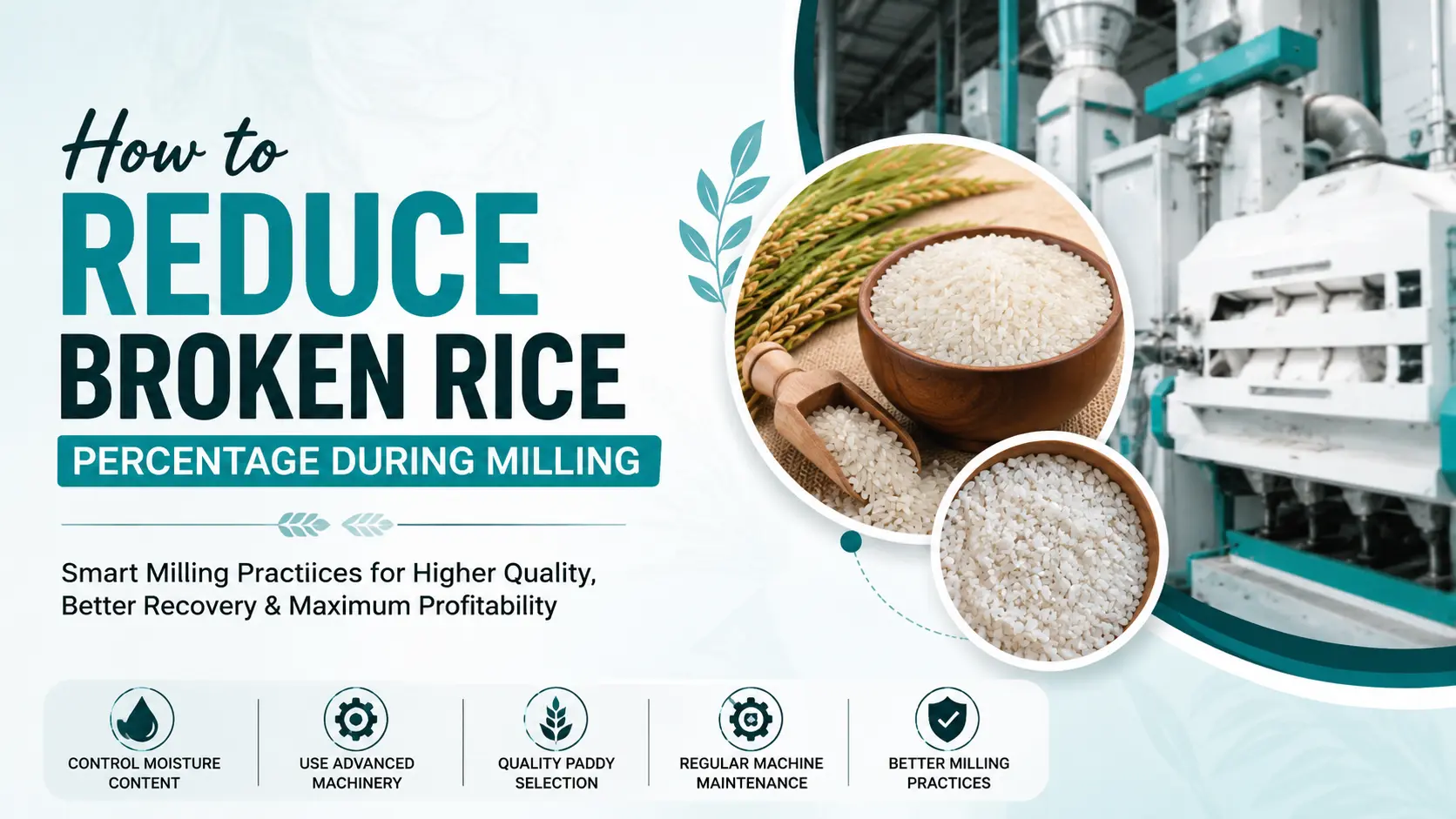
Rice milling is one of the most important processes in the rice production industry. The quality of milled rice directly impacts market value, customer satisfaction, and profitability. One of the biggest challenges faced by rice mill operators is the high percentage of broken rice generated during milling. Excessive rice breakage not only reduces the value of the final product but also affects overall milling efficiency.
Whether producing premium rice varieties or handling large volumes of paddy, reducing broken rice percentage is essential for maximizing returns. In this guide, we will explore the major causes of rice breakage and practical ways to minimize losses during the milling process.
Understanding Broken Rice
Broken rice refers to rice grains that are fractured during harvesting, drying, handling, or milling. While broken rice has applications in food processing, animal feed, and industrial uses, whole grains generally command a much higher market price.
Different grades of broken rice are available in the market, including 5 broken rice, 100 broken rice, and 100 broken parboiled rice, depending on the percentage of grain breakage. The demand for broken basmati rice and broken raw rice also varies across domestic and international markets.
Also Read: What is the Paddy Rice Separator Machine? Working Principle Explained
Why Does Rice Break During Milling?
Several factors contribute to grain breakage during rice processing:
1. Improper Paddy Moisture Content
Moisture content plays a crucial role in rice milling performance. Paddy that is too dry becomes brittle and more susceptible to breakage. On the other hand, excessively moist paddy can create processing difficulties and reduce milling efficiency. The ideal moisture content for milling generally ranges between 12% and 14%, depending on the rice variety and milling equipment.
2. Poor Quality Paddy
Low-quality paddy often contains immature grains, damaged kernels, and impurities that increase the chances of breakage during milling. Using high-quality paddy ensures better rice recovery and fewer broken grains.
3. Incorrect Machine Settings
Rice milling machines require proper adjustment and calibration. Excessive pressure, improper roller clearance, or incorrect machine speed can significantly increase the percentage of broken rice.
4. Inefficient Drying Process
Rapid or uneven drying creates internal stress within rice kernels. These stress cracks become major causes of grain breakage during milling.
5. Worn-Out Machinery Components
Old rubber rollers, damaged screens, and worn polishing equipment can negatively impact grain handling and increase rice breakage.
Effective Ways to Reduce Broken Rice Percentage
Maintain Optimum Moisture Levels
One of the most effective ways to reduce broken rice is maintaining proper moisture content before milling. Uniform drying and moisture management help preserve grain integrity and improve head rice recovery.
Modern drying systems allow rice mill operators to achieve consistent moisture levels, minimizing internal cracks and reducing grain breakage.
Invest in Advanced Rice Mill Machinery
Modern rice mill machinery is designed to process paddy efficiently while minimizing grain damage. High-quality equipment ensures smooth handling, precise pressure control, and improved rice recovery rates.
At Annapurna Agronics Machinery Pvt. Ltd., advanced rice milling solutions help operators achieve higher productivity with lower grain losses.
Use High-Quality Paddy Cleaning Systems
Before milling, paddy should be thoroughly cleaned to remove stones, dust, straw, and foreign materials. Impurities can interfere with milling operations and damage rice kernels.
A well-designed pre-cleaning and grading system significantly improves milling performance.
Optimize Rubber Roll Husker Settings
The husking stage is critical for rice quality. Incorrect pressure between rubber rollers can lead to excessive grain breakage. Regular monitoring and adjustment of roller settings ensure effective husk removal while protecting rice kernels.
Ensure Uniform Paddy Drying
Uneven drying often creates stress cracks that are not visible externally. During milling, these cracked kernels easily break apart.
Using controlled drying techniques and avoiding sudden temperature changes can greatly reduce grain damage.
Regular Equipment Maintenance
Routine maintenance is essential for optimal machine performance. Operators should inspect and replace worn components regularly, including:
- Rubber rollers
- Screens
- Bearings
- Polishing chambers
- Elevators and conveyors
Well-maintained equipment produces higher-quality rice with fewer broken grains.
Importance of Proper Grading
Rice grading systems separate whole grains from broken rice efficiently. Advanced grading machines improve product quality and help mills maximize profits.
Different grades such as 5 broken rice, 100 broken rice, and broken raw rice serve various market segments. Accurate grading ensures that each category is processed and marketed appropriately.
Role of Parboiling in Reducing Rice Breakage
Parboiling is a widely used process that strengthens rice kernels before milling. During parboiling, paddy is soaked, steamed, and dried, which improves grain hardness and reduces breakage.
This is one reason why 100 broken parboiled rice often exhibits different characteristics compared to broken rice produced from raw milling processes.
Properly executed parboiling can increase head rice yield and improve overall milling efficiency.
Market Demand for Broken Rice
Although rice mills strive to reduce breakage, broken rice remains a valuable commodity with numerous applications.
Broken Basmati Rice
Broken basmati rice is commonly used in food preparation, ready-to-cook products, and institutional kitchens. Due to its aroma and taste, basmati broken rice maintains strong demand in domestic and export markets.
Many buyers also search for broken basmati rice 20kg packaging options for commercial and wholesale use.
Broken Raw Rice
Broken raw rice is widely used in rice flour production, brewing, snacks, and animal feed manufacturing.
100 Broken Rice
100 broken rice consists entirely of broken kernels and is used in food processing industries, starch manufacturing, and feed applications. Market demand often influences the 100 broken rice price, making efficient grading and quality control important for rice mill operators.
Benefits of Reducing Broken Rice Percentage
Reducing rice breakage offers several advantages:
- Higher Profitability- Whole rice grains fetch premium market prices compared to broken rice grades.
- Better Product Quality- Lower breakage enhances appearance, consistency, and customer satisfaction.
- Improved Milling Efficiency- Optimized processing reduces waste and increases rice recovery.
- Stronger Market Competitiveness- High-quality rice helps mills build a stronger reputation and attract more customers.
- Increased Export Opportunities- Many international buyers prefer rice with low broken percentages, creating better export prospects.
Choosing the Right Rice Mill Machinery Provided by Annapurna Agronics
Selecting advanced and reliable rice mill machinery is one of the most important investments for any rice processing facility.
When evaluating equipment, consider:
- Milling capacity
- Automation level
- Energy efficiency
- Grain handling technology
- Maintenance requirements
- Rice recovery performance
Modern milling solutions help reduce breakage while increasing operational efficiency and profitability.
Conclusion
Reducing broken rice percentage during milling requires a combination of quality paddy, proper moisture management, advanced machinery, and regular maintenance. By optimizing each stage of the rice milling process, operators can significantly improve rice recovery rates and product quality.
Whether processing premium basmati varieties or handling large-scale commercial production, minimizing grain breakage directly contributes to higher profits and better customer satisfaction. Investing in modern rice mill machinery and adopting best practices can help rice mills achieve consistent results while reducing losses caused by broken rice.