
Rice is one of the most important staple foods in the world, especially in India. But have you ever wondered how rice is transformed from a paddy grain to the polished white rice on your plate? This process happens inside a rice mill — a facility where raw paddy is converted into edible rice. Annapurna Agronics Machinery Pvt. Ltd. specialize in manufacturing high-performance rice milling machines, and in this blog, we’ll explain how a rice mill works.
What is Rice Milling?
Rice milling is the process of removing the husk (outer layer) and bran (inner layer) from paddy to produce clean, white rice that is suitable for consumption. This involves several mechanical steps to ensure that the rice is properly processed without damage to the grain.
How Does Rice Mill Work?
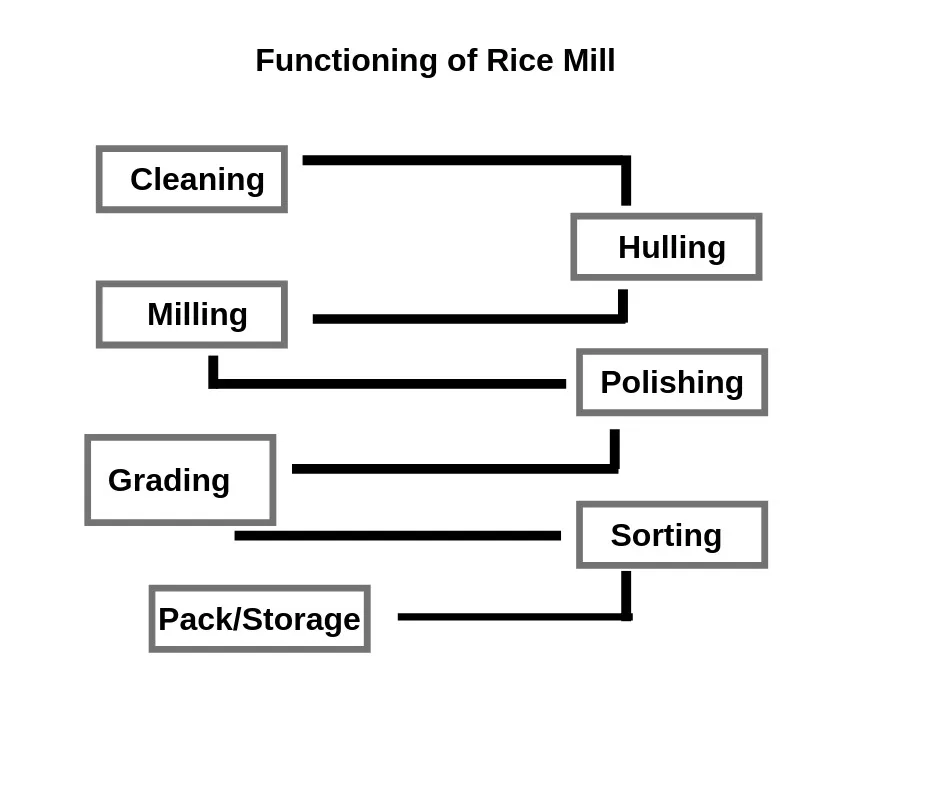
- Cleaning – The first step is cleaning the raw paddy. It involves removing dust, stones, leaves, and other impurities using pre-cleaners and de-stoners. This ensures the raw material is free from foreign matter before processing.
- De-husking (Husking) – Once cleaned, the paddy moves into a de-husker machine, where the hard husk is separated from the rice grain using friction. This process produces brown rice, which still has the bran layer.
- Paddy Separation – After de-husking, not all paddy may be husked properly. A paddy separator separates the unhusked grains from the brown rice and recycles them back for reprocessing.
- Whitening / Polishing – In this stage, the brown rice is polished to remove the bran layer, resulting in white rice. This process may involve one or more polishing stages depending on the desired quality.
- Grading – The polished rice is then graded based on size. Broken rice is separated from full grains, and sometimes further processed for different markets.
- Sorting – Modern rice mills use color sorters to detect and remove discolored or damaged grains, ensuring that only clean and uniform rice is packaged.
- Packaging – The final step is weighing, bagging, and packaging the rice for storage or sale. High-quality packaging helps preserve freshness and prevents moisture or pest damage.
Flow Chart of Rice Milling
Importance of Modern Rice Milling Machines
We manufacture advanced rice mill machinery that ensures:
- Higher output with less grain breakage
- Improved rice quality and appearance
- Energy-efficient operations
- Minimal human intervention and maximum automation
Our machines are suitable for small to large-scale rice mills and are designed with easy maintenance and durability in mind.
Conclusion
So, how does rice mill work? From cleaning and de-husking to polishing and sorting, each step is crucial in turning raw paddy into the rice we eat daily. At Annapurna Agronics Machinery Pvt. Ltd., we’re proud to support farmers, millers, and rice processors with state-of-the-art machinery that makes this process faster, cleaner, and more profitable.
If you are looking to set up a modern rice mill or upgrade your current machinery, contact us today. Our team will help you choose the right equipment according to your needs and budget.